LinkedIn Ads for B2B: Expensive, Slow, and Often Empty
LinkedIn Ads is the most expensive B2B advertising channel, and frequently the worst-performing on ROI. We look at why, and where your budget belongs instead.
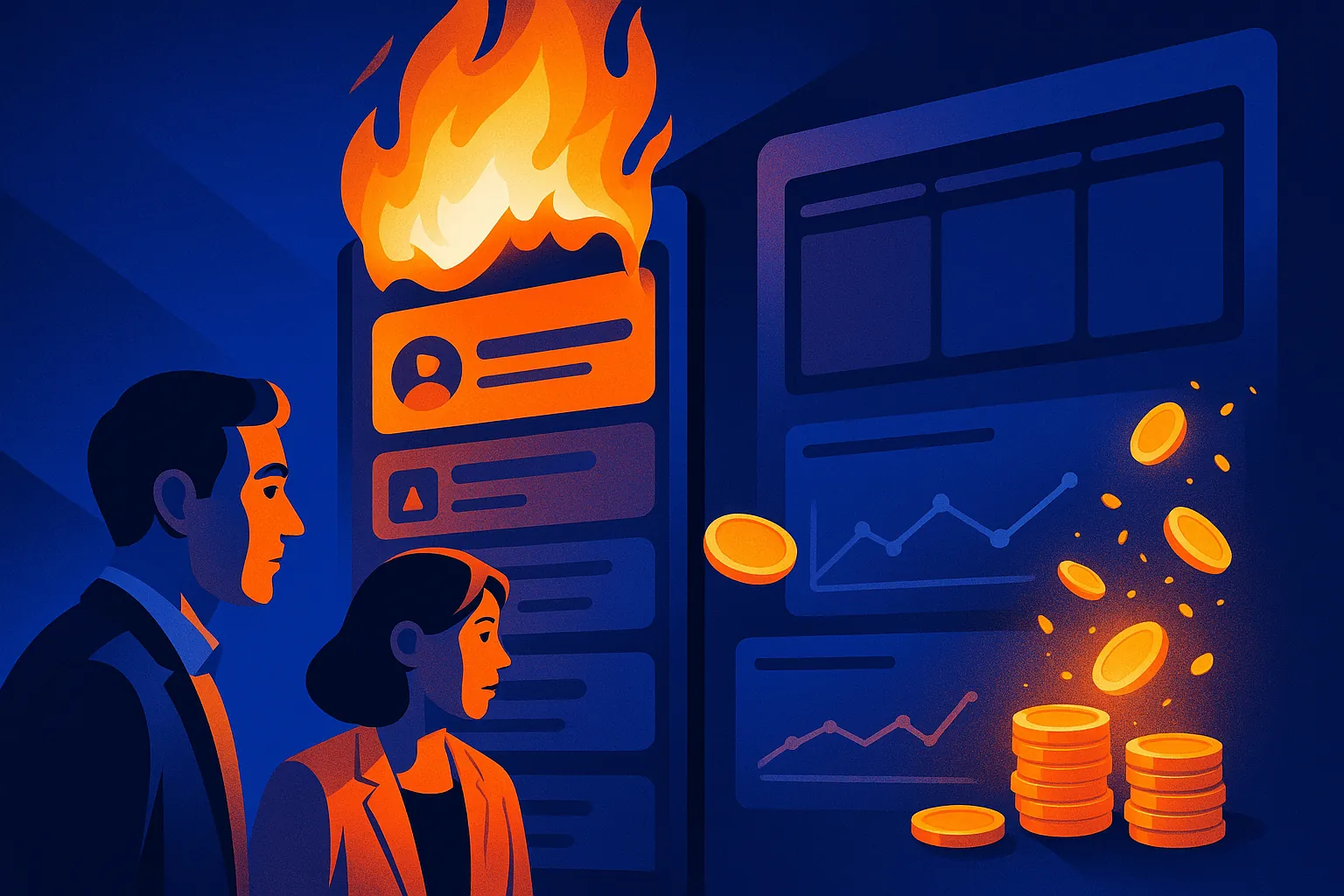
LinkedIn Ads (LinkedIn's paid advertising platform) is the most expensive B2B advertising channel today - and for most companies, the worst-performing on return. That's not a popular thing to say, because the platform's marketing is aggressive and the interface is slick. In practice, though, when you look at the numbers honestly, LinkedIn Ads tends to produce empty reports at a premium price.
This article looks at why the classic B2B LinkedIn campaign falls flat, and where the freed-up budget is better directed.
Why is LinkedIn Ads so expensive?
LinkedIn knows full well that its users aren't consumers - they're business decision-makers. From an advertiser's point of view, the value of an average LinkedIn user is many times that of an average Facebook user. The platform bakes that straight into its pricing.
On a meaningful B2B keyword or segment, cost per click typically lands somewhere between €8 and €40 - higher still for international markets. The CPM (cost per thousand impressions) of an average professional ad is among the most expensive in the industry. This isn't a flaw; it's the platform's business model. You just need to know precisely that every impression carries this kind of price tag.
The B2B buyer doesn't buy on LinkedIn
Here comes the first honest realization: LinkedIn is good at getting your company seen, and weak at making an immediate business decision happen on the spot. B2B purchases take weeks, involve several people, and the decision-maker rarely conducts serious negotiations from their LinkedIn feed.
That means a LinkedIn campaign doesn't convert directly - it just generates mood. There's certainly a place for that kind of "brand-building" budget, but only if you know exactly what you expect from it and how you'll measure it. Most companies don't use it that way: they expect concrete leads, and the reports don't deliver them.
The "Lead Gen Form" trap
One of LinkedIn's most popular products is the Lead Gen Form - a pre-filled form you can submit with a single click. The numbers look great: low cost per lead, high form conversion. The problem is that a significant share of those submissions aren't genuine interest.
A single tap pulls a person's own profile straight into the form - often by accident, or on the fly, out of quick curiosity. From that moment the lead sits in your CRM, a salesperson chases it, has three empty rounds of conversation, and the numbers show a "converted" checkmark - with no deal. LinkedIn measures well, but it isn't measuring your revenue.
The illusion of targeting
On paper, LinkedIn's targeting system is wonderful: precise job title, company, industry, headcount, skills. In practice, profiles aren't always up to date. Many people haven't updated theirs in years, others deliberately embellish (a more impressive title, an old company), and the "Senior Decision Maker" often isn't one.
Anyone who builds solely on LinkedIn filters can easily reach people whose profiles look great but who, in reality, have no authority over the buying decision. More advanced B2B research validates this from the company side (affiliated companies, procurement hierarchy, recent news), not just at the profile level.
Where's the break-even line?
LinkedIn Ads isn't a bad channel, but for it to perform positively, you have to layer it rigorously. Realistic conditions: a very narrow, validated audience, a high average customer value (a closed contract worth at least several thousand euros), an established CRM feedback loop, and a consciously accepted long evaluation window (3-6 months).
Anyone who launches without these can burn several thousand euros a month while the number of conversations barely moves at all.
Where is the budget better spent?
In B2B, direct, controlled outreach is far more effective than paid impression-based channels. A targeted cold email campaign, for a single monthly cost, reaches exactly as many decision-makers as you decide on - and within days you can see who replied and who didn't.
A managed solution (like b2brelay.com) also takes the technical side off your plate: dedicated, warmed-up inboxes, nine checks before every message, your main company email left untouched. The budget is the same; the output is far more measurable.
Summary
LinkedIn Ads isn't a bad channel - it's just expensive, slow, and on its own often empty. Anyone who builds B2B customer acquisition solely on it is usually running the most expensive experiment around. Sensible B2B marketing complements paid impressions with a direct, predictable channel - it doesn't replace one with the other.
If you're curious what this combination looks like in practice, book an intro call at b2brelay.com.

Kapás Bence
Founder · operator, b2bemail
Our clients' B2B outreach runs on a system I built: it researches the decision-makers, drafts a personalized email for each recipient, and tracks every reply that comes back. My role is oversight — I review the campaigns daily, and the judgment calls stay with me and the client.
Learn more about the serviceLet's talk about your own campaign.
On a 30-minute intro call we'll look at who's worth reaching and what you can realistically expect.
Book a call